

Balwant Singh Sangha
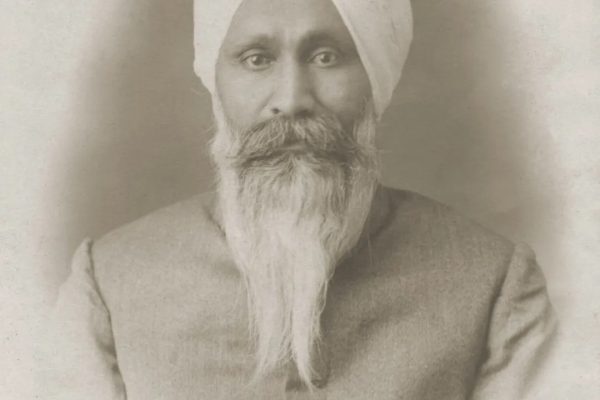
Some family memories live in the deepest corners of our hearts, waiting for a gentle knock to awaken them—whether through an offhand remark, a faded photograph, or a familiar scent preserved across time. Recently, that spark was reignited by Mohna Mamaji’s ongoing research, lovingly shared with me by Baby Masiji and cousin Chiraagi. Their findings unveiled compelling new details about their father and my granduncle, Col. Balwant Singh Sangha —particularly his role in leading covert espionage for the Indian National Army (INA) and the substantial British bounties placed on his capture.
This discovery gave renewed significance to one of the most remarkable stories my mother had shared about Balwant Mamaji. In 1945, he was unexpectedly spotted inside a highly restricted British detention camp by his brother-in-law, Masserji Tek Singh, who was married to his sister Ishwar Kaur. Their paths crossed only because Tek Singh, the son of the renowned builder and contractor Sardar Bahadur Basakha Singh, held construction contracts tied to that detention center and other British military and government sites, granting him access to restricted areas. In that guarded and dangerous setting, Balwant Mamaji caught Masserji’s eye and offered the slightest sign of recognition—a discreet wave, no more than a flicker—careful not to arouse suspicion, as even the hint of a connection could have placed Tek Singh in grave danger. When Masserji returned the next day, Balwant Mamaji was gone. With great caution, Masserji searched for his whereabouts and, after bribing some guards, learned that he had been transferred to Delhi’s Red Fort for interrogation and military trial. He then quietly conveyed the news to his father-in-law, Balwant Mamaji’s father, Sardar Gahil Singh, the Nazim of the Mahendergarh-Narnaul Nizamat under Patiala State, who used his close ties to Maharaja Bhupinder Singh to pursue every possible avenue for his son’s release.


As India prepares to celebrate its 80th Independence Day on August 15, this discovery feels especially meaningful. It allows us to remember Balwant Mamaji not only as a beloved family figure, but also to trace the extraordinary arc of his life—from a British Indian Army officer before the war to a courageous member of the Indian National Army who chose the perilous path of resistance. His story belongs among the many untold accounts of India’s sons who risked everything in defiance of the British Empire so the nation could one day stand free and determine its own destiny. Before following the chronology of his military journey and role in India’s freedom struggle, I want to first remember him as I knew him—not through archives, books, or classified records, but through the tender lens of childhood.
 My memories of Balwant Mamaji are rooted in early childhood. Though many details have faded, what remains is his essence — his gentle presence, the warmth and joy of our visits, and the way his eyes lit up whenever he saw my mother, his niece. I also remember my fascination with the potted ornamental orange tree in his front yard. As a child, I could not comprehend how fruit so bright and beautiful could taste so bitter. Still, with the optimism only childhood allows, I kept plucking them, hoping that one day I would find a sweet one. I never did. But that little tree gave him a name. He became forever etched in my memory as “Orange-wale Mamaji”—the affectionate childhood name through which I remembered him, held onto his stories, and understood our bond within the vast, branching tree of our family.
Behind this gentle figure from my childhood lies a far larger and more dangerous story—one shaped by war, captivity, rebellion, espionage, and sacrifice. To understand the full measure of Balwant Mamaji’s life, we must return to the beginning and follow the path that led him from Punjab to Malaya, from the British Indian Army to the INA, and ultimately into the shadowed corridors of the Red Fort.
Early Years
Balwant Mamaji was born on July 17, 1910, the fifth child of Sardar Gahil Singh and Chand Kaur. My grandmother, Chitwant Kaur, was his elder sister and the second-born among seven siblings, four brothers and three sisters. He completed his schooling at Khalsa College, Amritsar, before studying at Punjab Agricultural College and Research Institute in Lyallpur. He later undertook a demanding two-and-a-half-year officers’ training course at the newly established Indian Military Academy (IMA) in Dehradun, becoming part of one of its earliest founding batches. On January 30, 1938, he was commissioned as a Second Lieutenant in the 5th Battalion of the 2nd Punjab Regiment (5/2 Punjab), an infantry unit, beginning his career in the British Indian Army.

Balwant & Harbhajan
He was married twice. His first wife, Sardarni Datar Kaur, passed away at a young age, reportedly from tuberculosis. To help care for their young children, he later married her cousin, Harbhajan Kaur, on February 14, 1939. His family eventually included six children: Baldip Singh, Baljit Kaur (Guddi), Balram Kaur (Bam), Baldish Kaur (Baby Masiji, Chiraagi’s mother), Randip Singh (Mohna Mamaji), and Prabhdip Kaur (Momi). He passed away peacefully at his home in Sector 8C, Chandigarh, in the summer of 1984.


Malaya Campaign and Fall of Singapore
His unit arrived in Malaya in August 1939, just months before World War II, to defend the southern beaches and approaches to George Town, a key maritime gateway. For nearly two years, the deployment remained quiet, until Japanese forces invaded in December 1941. Although the battalion fought with courage, it was constrained by shortages of equipment, supplies, reinforcements, and air cover, as Britain had prioritized the war against Nazi Germany. Allied forces, under-resourced and unprepared for Japan’s rapid air, naval, and jungle-infiltration tactics, could not hold their forward positions and began a slow, grueling retreat down the Malayan Peninsula. By early February 1942, they had withdrawn across the Johore Strait to Singapore, the fortress Winston Churchill had ordered defended at all costs. Japanese troops landed on February 8 and quickly overwhelmed the exhausted defenders through air power, armor, and night attacks. With defenses collapsing, civilian casualties mounting, and the water supply compromised, Lieutenant General Arthur Percival surrendered unconditionally on February 15, 1942. The fall of Singapore sent more than 130,000 Allied personnel into captivity, including Captain Balwant Singh Sangha and his fellow soldiers of the 5/2 Punjab, marking one of the largest mass surrenders in British military history.


The POW Nightmare
Commonwealth troops were thrust into a brutal ordeal under the Imperial Japanese Army, which viewed surrender as the ultimate dishonor and denied prisoners basic rights, dignity, and the protections of the Geneva Convention, which Japan had not ratified. About 80,000 Allied troops were marched to Changi Prison and Selarang Barracks, facilities built for a peacetime garrison of roughly 5,000 men. Overcrowding was severe. Sanitation failed, dysentery and tropical diseases spread quickly, and rations were reduced to small portions of poor-quality, rotting rice mixed with dirt and husks. Malnutrition caused extreme weight loss and vitamin-deficiency illnesses such as beriberi and pellagra. With medical officers lacking proper equipment and essential drugs like quinine, even minor wounds could turn into serious tropical ulcers, sometimes requiring amputations without anesthesia. Discipline was enforced through fear and violence by the Kempeitai, the Japanese secret military police, who punished even minor offenses—such as failing to bow deeply enough—with beatings, rifle butts, rubber hoses, and prolonged exposure to the sun. Prisoners also faced the constant threat of forced labor, with thousands sent to deadly labor camps such as the Burma-Thailand Railway, where many died from overwork, cholera, and starvation.
For Indian soldiers of the British Indian Army, this physical suffering carried an even deeper psychological burden. Roughly 67,000 Indian personnel were captured by Japanese forces, forming a large share of the prisoners taken. Japanese authorities quickly separated them from British and Allied troops, seeing an opportunity to turn colonial subjects into anti-British allies. To break their resistance and compel support for the Japanese-backed Indian National Army, recruiters and the Kempeitai used relentless propaganda, prolonged interrogations, and horrific torture, including water torture, solitary confinement in suffocating iron cages under the blistering sun, and starvation. Officers and soldiers who resisted were told they had been abandoned by the British Empire and that their only remaining path was to fight for India’s freedom. Trapped between continued captivity and the promise of liberation, they faced an agonizing test of loyalty.


Joining the First INA, Becoming Azad Hind Fauj Under Netaji, and Clandestine Operations
Whether motivated by a patriotic desire to help liberate India or by the desperate need to escape the disease-ridden horrors of Japanese captivity, Captain Balwant Singh Sangha joined the Indian National Army in the bleak aftermath of Singapore’s fall. He first helped build the underground network under Captain Mohan Singh, then moved into high-risk espionage, leading a trusted regional resistance and intelligence outpost from the coastal hideouts of Batu Ferringhi, Penang. After Mohan Singh’s arrest in 1942, the movement entered a period of uncertainty until Netaji Subhas Chandra Bose arrived in Southeast Asia and galvanized the Indian diaspora.
On October 21, 1943, Netaji proclaimed the Provisional Government of Free India, or Azad Hind, and revitalized the force as the Azad Hind Fauj. Under this renewed structure, Captain Balwant’s cell, along with groups led by S.N. Chopra and Baba Usman Khan, was brought under the Directorate of Military Bureau. Now serving as an INA Major, Balwant Mamaji became part of the elite clandestine training network centered at the Penang Intelligence School, widely known as the Indian Swaraj Institute, in Tanjong Bungah. There, he served as a key leader in the secret service and espionage wing, overseeing rigorous 14-hour training days for selected officers in wireless telegraphy, Morse code, navigation, operational tradecraft, survival mapping, and field tactics. His most critical work involved preparing and launching secret agents behind enemy lines by submarine or through dangerous infiltrations across the Burma frontier to establish underground cells and sabotage British colonial infrastructure. These deeply subversive operations made him a relentless target of British intelligence and colonial police, who placed heavy bounties on his capture.


Fall of the Azad Hind Fauj, Allied Reconquest, and Eventual Capture
In the summer of 1945, the collapse of the Axis powers abruptly destroyed the geopolitical support system behind the freedom struggle. Japan’s surrender caused the military, logistical, and financial backing for the Azad Hind Fauj to disappear almost overnight, bringing the campaign to an end. The situation was further compounded by the sudden death of Netaji Subhas Chandra Bose in a plane crash in Taiwan in August 1945. Without its charismatic supreme commander, external funding, or supply lines, the INA’s vast network across Southeast Asia quickly lost momentum. As British and Allied forces returned to Malaya, Burma, and Singapore to restore colonial control, they seized telegraph lines, police archives, and local infrastructure, leaving underground operatives exposed without safe houses or institutional protection.
In the chaotic aftermath, British military intelligence, the Inter-Services Liaison Department, and colonial police launched widespread manhunts for former INA personnel. To process the thousands of captured soldiers, British authorities used a strict color-coded classification system, sorting detainees into White, Grey, and Black categories according to their perceived guilt and ideological threat. Given his senior role in directing espionage, managing coastal intelligence outposts in Penang, and training agents for sabotage behind enemy lines, Major Balwant Singh Sangha would likely have been placed in the feared “Black” category, reserved for hardliners, core intelligence officers, and those considered dangerous enemies of the Crown.
With large British bounties placed on senior intelligence officers and capture becoming increasingly likely, Balwant Mamaji took drastic steps to survive the post-war sweep. Though he tried to blend into the shadows by shaving his face, cutting his hair and assuming the alias Abdul Rashid, the net eventually closed and he was eventually arrested.
Imprisonment, Red Fort Trials, and Eventual Release
Transported under heavy military guard to mainland India, high-priority officers such as Major Balwant Singh Sangha were confined in harsh interrogation centers and military prisons, particularly around Delhi. This is where the story shared at the beginning of this article comes full circle, as Masserji Tek Singh unexpectedly spotted him in one of these camps.
British authorities prepared high-profile courts-martial at the historic Red Fort to prosecute captured INA personnel for “waging war against the King.” Their intent was to make public examples of those accused of collaborating with the enemy and violating their military oaths. Instead, they misread the political mood of post-war India. The trials sparked nationwide outrage, fierce anti-colonial protests, and broad public sympathy for the INA across communal lines.
Amid the threat of nationwide unrest and mounting pressure from nationalist leaders, including the Indian National Congress and the Muslim League, the colonial government eventually abandoned plans to execute the main defendants. Although Major Balwant Singh Sangha and fellow officers remained under intense scrutiny, the surge of public resistance, along with the British Empire’s exhaustion after World War II, helped pave the way for their eventual release and repatriation. In doing so, the INA veterans became enduring symbols of courage and sacrifice in India’s freedom struggle.


Final Honors and Recognition
With India’s hard-won independence in 1947, the legacy of the Azad Hind Fauj was transformed. Once branded as mutineers by the British Raj, surviving INA veterans came to be honored by free India’s leaders as early champions of freedom. For officers like Balwant Mamaji, independence brought official vindication, though it was soon followed by the immense challenges of nation-building and Partition.
Decades later, the Government of India established the Freedom Fighters’ Pension Scheme in 1972, later renamed the Swatantrata Sainik Samman Pension Scheme in 1980, to honor veterans of the independence movement. Through this program, Balwant Mamaji was formally recognized for his service and accorded his equivalent INA Colonel rank. After retiring to Chandigarh, he received a traditional brass plaque, or Tamra Patra, along with a modest monthly freedom fighter pension of 200 rupees.
While leaders like Netaji became central figures in the history books, intelligence officers such as Balwant Mamaji carried their sacrifices into quieter post-independence lives. He lived with dignity, shaped by the scars of wartime espionage, the trauma of Partition, and a lifelong commitment to integrity.

A Final Tribute: The Courage of “Orange-wale Mamaji”
Looking back across the decades, through both history and family memory, Balwant Mamaji emerges as one of the unsung giants of our past. His life carried him through some of the darkest chapters of the twentieth century—from the battlefields of Malaya and the horrors of POWs in labor camps to the hidden world of wartime espionage and the stone walls of the Red Fort.
Yet beyond his valor, secret missions, bounties, and military honors, those of us connected to him by family remember a man marked by quiet gentleness. He gave his youth, safety, and unwavering devotion to a dream he lived to see fulfilled: a free motherland.
Though the bitter oranges of Sector 8C never yielded sweetness, the legacy he left behind remains deeply sweet—a lasting testament to courage, sacrifice, and quiet dignity that will live in our hearts forever.


